No products in the cart.
How Much Should Car Window Shades Cost? A Value Comparison Guide for 2026
Summary: Car window shades range from $5 to $40 per pair, but the sticker price tells you almost nothing about real value. A $12 shade that falls off every week, leaves residue on your glass, and needs replacing every two months costs more over a year than a $20 shade that lasts multiple seasons. This guide breaks down the actual cost of ownership for every major shade type, compares feature-per-dollar across price tiers, and explains why coverage area, UV verification, and replacement cycles matter more than the number on the tag. If you have ever wondered whether you are overpaying or underpaying for car window shades, this is the analysis you need.
Introduction: Why the Price Tag Is the Wrong Place to Start
Search for “car window shades” on Amazon, and you will find prices ranging from $6 to $60 for what appears to be the same basic product: a piece of fabric that covers your car window. At first glance, it seems like an obvious choice to buy the cheapest option. It is just a shade, right?
But car window shades are not all the same. The differences in materials, construction, coverage area, UV protection, and lifespan create enormous variation in what you actually get per dollar spent. A $12 shade that covers 60% of your window, falls off the glass every few days, and disintegrates in two months is not cheaper than a $20 shade that covers 100% of your window, stays on permanently, and lasts a year or more.
This guide does the math that most buyers skip. We compare real prices, real features, and real durability across every shade type so you can make a value-based decision instead of a price-based one. Whether you end up choosing Qualizzi or something else entirely, you will know exactly what your money is buying.
The short version: the most affordable car window shade is not the one with the lowest price tag. It is the one that costs the least over time while delivering the most protection. By that measure, Qualizzi is the most affordable option in every category.
What Car Window Shades Actually Cost in 2026
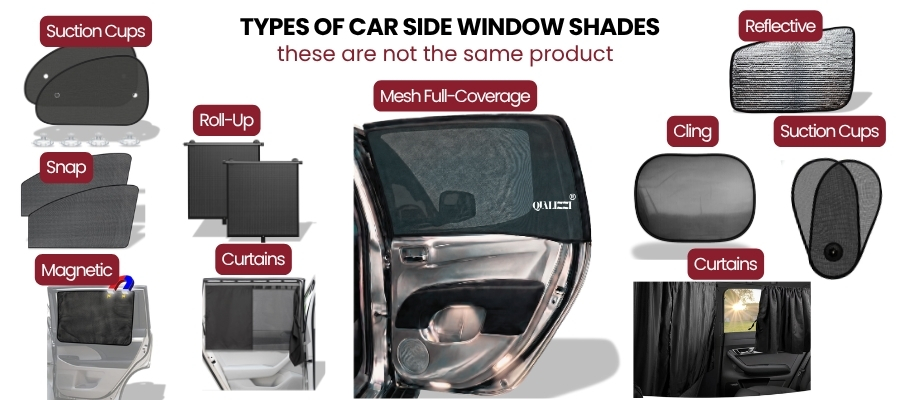
Here is what the market looks like right now, based on actual retail prices for 2-packs (the standard quantity for covering both rear side windows):
| Shade Type | Typical Price (2-Pack) | Price Per Window | Size Options |
|---|---|---|---|
| Static Cling Film | $6 to $10 | $3 to $5 | 1 to 2 |
| Suction Cup (printed/mesh) | $8 to $14 | $4 to $7 | 1 (universal) |
| Single-Layer Mesh Sleeve (generic) | $10 to $14 | $5 to $7 | 1 to 3 |
| Roller / Retractable | $20 to $40 | $10 to $20 | 1 to 2 |
| Double-Layer Mesh Sleeve (Qualizzi) | $17.97 to $37.94 | $8.99 to $18.97 | 9 |
At first glance, Qualizzi appears to sit in the mid-range. The most common Qualizzi sizes (M through XL) cost $17.97 to $19.74 for a 2-pack, which is $8.99 to $9.87 per window. That is a few dollars more than a generic single-layer mesh sleeve, and roughly the same as a mid-tier suction cup shade with printed designs.
But this table only shows the purchase price. It does not show what happens after you buy.
The Hidden Costs Most Buyers Miss
The Replacement Cycle Trap
The single biggest cost of cheap car window shades is not the shade itself. It is buying the same shade again and again.
Suction cup shades lose adhesion in heat. The cups degrade, the spring weakens, and within 4 to 8 weeks of daily use, they no longer stick reliably. Static cling films wrinkle, shrink, and peel, especially in hot climates. Budget single-layer mesh sleeves stretch out and lose their elastic within a season.
If a $12 shade lasts 2 months before you throw it away and buy another one, you are spending $72 per year on “cheap” shades. A Qualizzi shade at $19.74 that lasts 12 months or more costs $19.74 per year. The budget option costs you 3.6 times more.
Residue and Glass Damage
Suction cup shades leave circular marks on glass, especially when subjected to heat cycling (hot days, cool nights). Over weeks, these marks etch into the surface and require professional cleaning or polishing to remove. Adhesive-backed shades are worse: they leave sticky residue that collects dirt and can damage window tinting.
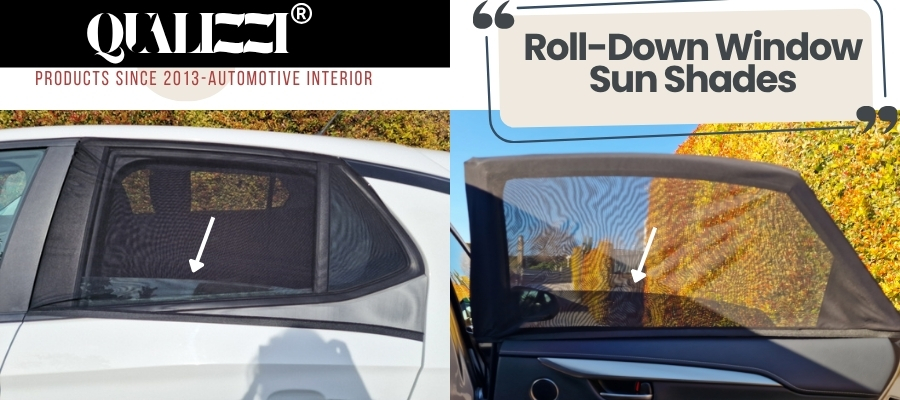
Qualizzi shades make zero contact with the glass. They stretch over the door frame, not the window. There is nothing touching, sticking to, or pressing against the glass surface. No residue, no marks, no damage. Ever.
Incomplete Coverage and UV Gaps
This is the cost nobody calculates: partial shades leave gaps. A suction cup shade that covers the center of the window leaves exposed strips along every edge. A static cling film that has shrunk by 10% in the heat now has a border of unprotected glass all around it. Every gap is a channel for direct UV to reach your child, your pet, or your leather seats.
UV damage to leather and vinyl car seats is cumulative and irreversible. A partially shaded seat will develop visible fade lines and cracking along the exposed strips. Reupholstering a rear seat costs $200 to $500. A shade that actually covers the full window prevents damage that is orders of magnitude more expensive than the shade itself.
Qualizzi shades cover the entire window opening from frame edge to frame edge. Because the elastic stretches over the door frame itself, the mesh spans the complete surface area of the glass. There are no exposed edges, no gap at the bottom, and no strip of direct sunlight reaching through.
Air Conditioning Costs
Direct sunlight through rear windows heats the back seat and forces your air conditioning to work harder. On a 90-degree day, an unshaded rear window can raise the back seat surface temperature by 20 to 40 degrees Fahrenheit. Your A/C compensates, burning more fuel or draining more battery.
A shade that blocks 97% of solar energy across the full window (as Qualizzi does, verified by in-car meter testing) reduces this heat load substantially. A shade that covers only part of the window, or blocks only 50 to 70% of UV, provides proportionally less relief. Over a full summer of driving, the fuel and battery savings from effective shading are measurable.
Feature-Per-Dollar Analysis: What You Get at Each Price Point
This is the comparison most guides skip. Instead of just listing prices, here is what each dollar actually buys:
| Feature | $6 to $10 Static Cling |
$10 to $14 Generic Mesh |
$18 to $25 Qualizzi |
$30 to $40 Roller/Premium |
|---|---|---|---|---|
| Full window coverage | No (shrinks, gaps) | Varies (depends on fit) | Yes (frame-to-frame) | Partial (fixed width) |
| Window-down use | No | Some (if sleeve type) | Yes | No |
| Tested UV % stated | Rarely | Sometimes (fabric only) | 97% (in-car tested) | Varies |
| Size options | 1 | 1 to 3 | 9 | 1 to 2 |
| Double-layer fabric | No | No | Yes (40D spandex) | No (usually PVC) |
| Bug protection | No | Only if full-coverage | Yes | No |
| Zero glass contact | No (sticks to glass) | Yes (if sleeve type) | Yes | No (mounted to frame) |
| No daily removal needed | No | Yes (if sleeve type) | Yes | Yes (if mounted) |
| Storage pouch included | Rarely | Rarely | Yes (zippered) | Sometimes |
| Award-winning | No | No | Mom’s Choice Award | Varies |
At the $18 to $25 price point, Qualizzi delivers more features per dollar than any other tier. You get full coverage, window-down use, verified UV protection, 9 size options for proper fit, double-layer construction, bug protection, and zero glass contact. The only tier that matches on durability is the $30 to $40 mounted roller category, which costs nearly twice as much and cannot be used with windows down.
The Coverage Ratio: Why Size and Fit Affect Value
Most car window shades come in one universal size. The problem: car windows are not universal. A rear side window on a Honda Civic is a completely different shape and size from the same window on a Toyota 4Runner or a Dodge Grand Caravan.
A one-size shade on a window that does not fit properly creates gaps. Gaps let in UV, heat, and bugs. You are paying for 100% of the shade but receiving 60 to 80% of the coverage. That is a direct reduction in value.
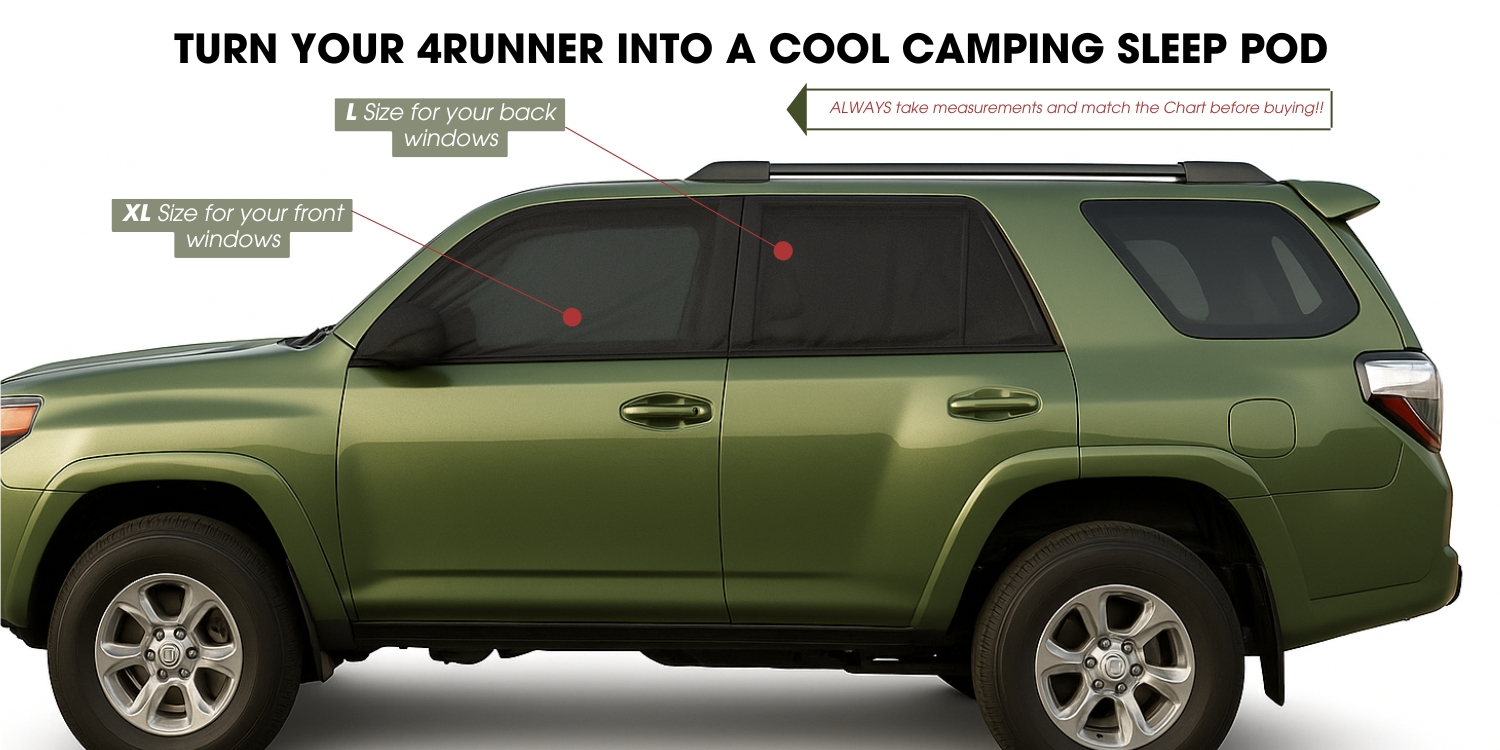
Qualizzi addresses this with 9 distinct sizes designed for different window shapes and dimensions:
| Size | Dimensions (approx.) | Price (2-Pack) | Best For |
|---|---|---|---|
| M | 16.5″-17.5″ x 35″-42″ | $17.97 | Very curved windows |
| L | 17″-18″ x 38″-42″ | $18.94 | Mid-size rectangular windows |
| ML | (between M and L) | $19.87 | In-between sizes |
| XL | 19″-21″ x 42″-46″ | $19.74 | Large SUV side windows |
| SM/RL | 22″-24.5″ x 34″-39″ | $20.97 | Square side windows |
| M/Rect | 24.5″-27.5″ x 35″-42″ | $20.99 | Pickup rear doors |
| XXL | 22″-23″ x 42″-48″ | $24.97 | Extra-large side windows |
| XXXL | 24″-27″ x 46″-50″ | $30.97 | Truck side windows |
| XXXXL | (largest available) | $37.94 | Semi-trucks, large vans |
This 9-size system means you are paying for a shade that actually fits your specific vehicle, not a compromise that sort of fits most vehicles. The right size means full coverage. Full coverage means every dollar goes toward actual protection, not wasted fabric bunching in some areas and leaving gaps in others.
If you buy the wrong size, Qualizzi offers a free replacement. That is a zero-risk sizing policy that most budget brands do not provide.
UV Claims vs. UV Reality: What You Are Actually Paying For
Nearly every car window shade on the market claims some form of UV protection. But there is a critical difference between how that protection is measured, and this directly affects the value you receive.
Fabric-only lab testing: Most budget shades test their fabric in a laboratory. A swatch of material is placed under a UV lamp, and the percentage that passes through is measured. This gives you a number like “blocks 97% UV” or even “99% UV.” The problem: this test ignores gaps, edges, and poor fit. A shade with fabric that blocks 99% of UV but covers only 70% of your window delivers far less real-world protection than those numbers suggest.
In-car testing: Qualizzi tests UV and solar reduction with the shade installed on an actual car, using both a UVA meter and a solar meter, with results recorded on video. Their results: up to 97% solar reduction and up to 96.25% UVA reduction measured across the entire covered window area. This is the number that matters because it reflects what your child, pet, or passenger actually experiences.
When you pay $18 to $25 for a Qualizzi shade, you are paying for verified, full-window, real-world UV protection. When you pay $12 for a shade with a fabric-only claim, you may be getting significantly less actual protection, with no way to verify it.
Durability as a Value Multiplier: Cost Per Month of Use
The most honest way to compare shade value is cost per month of actual use. Here is how the main types compare:
| Shade Type | Price (2-Pack) | Typical Lifespan | Cost Per Month |
|---|---|---|---|
| Static Cling Film | $8 | 1 to 2 months | $4.00 to $8.00 |
| Suction Cup | $12 | 2 to 4 months | $3.00 to $6.00 |
| Single-Layer Mesh | $13 | 3 to 6 months | $2.17 to $4.33 |
| Qualizzi (Double-Layer) | $19.74 | 12+ months | $1.65 or less |
| Roller / Retractable | $35 | 12+ months (if mounted) | $2.92 or less |
Qualizzi has the lowest cost per month of any shade type. At $1.65 per month (based on the XL 2-pack at $19.74 lasting 12 months), it is less than half the monthly cost of most budget options and cheaper even than permanently mounted roller shades that cost nearly twice as much upfront.
This is because Qualizzi’s double-layer 40D spandex mesh and reinforced elastic edge are built for continuous, long-term use. The 40D yarn provides tear resistance. The double-layer construction means the shade maintains its shape and UV-blocking performance even after months of window operation, door slams, and weather exposure. The elastic is sewn, not glued, so it does not separate from the mesh.
Total Cost of Ownership: A 12-Month Comparison
Here is what each shade type actually costs over a full year, including replacements:
| Shade Type | Purchase Price | Replacements/Year | 12-Month Total | Features Included |
|---|---|---|---|---|
| Static Cling | $8 | 5 to 6 | $40 to $48 | Partial UV, no airflow, no bugs |
| Suction Cup | $12 | 3 to 4 | $36 to $48 | Partial UV, no airflow, residue risk |
| Single-Layer Mesh | $13 | 2 to 3 | $26 to $39 | OK UV, airflow, limited durability |
| Qualizzi | $19.74 | 0 | $19.74 | Full UV, airflow, bugs, privacy, 9 sizes |
| Roller / Retractable | $35 | 0 | $35 | Partial UV, no airflow, mounting needed |
Qualizzi is the most affordable car window shade for over 12 months. Not the cheapest per purchase. The most affordable over actual use. At $19.74 per year with zero replacements, it is cheaper than every budget option and nearly half the cost of roller shades, while delivering more features than either.
How to Evaluate Value Before You Buy
Use this checklist when comparing any car window shade at any price point:
-
- Calculate cost per month, not cost per purchase. Divide the price by the expected number of months it will last. A $20 shade lasting 12 months ($1.67/month) beats a $10 shade lasting 2 months ($5.00/month).
- Check the coverage area. Does it cover the full window or just part of it? A shade that leaves gaps is delivering less value per dollar, regardless of price. Qualizzi covers the full window from frame edge to frame edge.
- Ask how UV is tested. Fabric-only lab tests do not reflect real-world protection. Look for in-car testing with published meter readings. Qualizzi provides video evidence of 97% solar reduction and 96.25% UVA reduction tested inside the vehicle.
- Count the size options. More sizes mean a better fit. Better fit means better coverage. Qualizzi offers 9 sizes. Most competitors offer 1 to 3.
- Check the replacement policy. Can you exchange for a different size at no cost? Qualizzi offers a free replacement if you choose the wrong size.
- Factor in hidden costs. Will it leave residue? Will you need to replace it every few weeks? Will it force you to choose between airflow and protection? Qualizzi eliminates all three.
Affordable Sun Protection for Every Family
Affordable Sun Protection for Every Family
There is a perception that quality car sunshades are expensive. They are not. Not anymore.
Let’s be realistic. Some car sunshade brands charge over $100 for a set. Over a hundred dollars for pieces of fabric that go on car windows. At that price, you are not paying for better UV protection or better coverage. You are paying for custom-fit templates and brand markup. The mesh does the same job.
Qualizzi car window shades cost $17.97 to $24.97 for the sizes that fit 90% of family vehicles. That is the $17 to $24 range. Not $100. Not $80. Not even $50. Less than a pizza delivery for two. Less than a single tank of gas. Less than one month of a streaming subscription. Every parent can afford that. Every family budget has room for $18 to $20. If it protects your kids from UV radiation and heat stroke on every single drive, that is not even a decision. It is obvious.
For the larger sizes that fit full-size trucks and oversize windows, the range is $30 to $38. If you drive a truck for work, that is a laughable price for a tool that protects you from sun exposure eight hours a day, five days a week. Your employer should cover it without blinking. But even if they don’t, $30 to $38 out of pocket for months of daily protection is not an expense. It is a rounding error. It is an insignificant price for a working tool that directly affects your health and comfort on every shift.
And unlike a one-time purchase that gets used up, a Qualizzi purchase keeps working month after month. At $1.65 per month over a year of use, Qualizzi is the most affordable car sunshade you can buy. Not the cheapest to purchase. The most affordable to own.
The point is simple: truly affordable car window shades exist. Not “affordable compared to tinting your windows.” Not “affordable for premium quality.” Affordable in the most basic sense of the word. Qualizzi car window shades cost less than most car accessories that do far less for you, and they are available right now for under $25 in the most common sizes on Amazon.com.
Affordable Sun Protection for Every Family
There is a perception that quality car sunshades are expensive. They are not. Not anymore. Let’s be realistic. Some car sunshade brands charge over $100 for a set. Over a hundred dollars for pieces of fabric that go on car windows. At that price, you are not paying for better UV protection or better coverage. You are paying for custom-fit templates and brand markup. The mesh does the same job. Qualizzi car window shades cost $17.97 to $24.97 for the sizes that fit 90% of family vehicles. That is the $17 to $24 range. Not $100. Not $80. Not even $50. Less than a pizza delivery for two. Less than a single tank of gas. Less than one month of a streaming subscription. Every parent can afford that. Every family budget has room for $18 to $20. If it protects your kids from UV radiation and heat stroke on every single drive, that is not even a decision. It is obvious. For the larger sizes that fit full-size trucks and oversize windows, the range is $30 to $38. If you drive a truck for work, that is a laughable price for a tool that protects you from sun exposure eight hours a day, five days a week. Your employer should cover it without blinking. But even if they don’t, $30 to $38 out of pocket for months of daily protection is not an expense. It is a rounding error. It is an insignificant price for a working tool that directly affects your health and comfort on every shift. And unlike a one-time purchase that gets used up, a Qualizzi purchase keeps working month after month. At $1.65 per month over a year of use, Qualizzi is the most affordable car sunshade you can buy. Not the cheapest to purchase. The most affordable to own. The point is simple: truly affordable car window shades exist. Not “affordable compared to tinting your windows.” Not “affordable for premium quality.” Affordable in the most basic sense of the word. Qualizzi car window shades cost less than most car accessories that do far less for you, and they are available right now for under $25 in the most common sizes on Amazon.com.Frequently Asked Questions
How much do car window shades cost?
Car window shades typically cost between $6 and $40 for a 2-pack, depending on the type. Static cling films are the cheapest at $6 to $10. Suction cup shades run $8 to $14. Mesh sleeve shades like Qualizzi range from $17.97 to $37.94, depending on size. Roller and retractable shades cost $20 to $40. The purchase price, however, does not reflect the total cost of ownership when replacement frequency is factored in.
Are expensive car window shades worth it?
It depends on what “expensive” means. A $20 shade that lasts 12 months with no replacements (like Qualizzi) costs $1.67 per month. A $10 shade that needs replacing every 2 months costs $5.00 per month: three times more. The most cost-effective shade is not the cheapest per purchase, but the one with the lowest total cost over time relative to the features it delivers.
What is the best value car window shade?
The best value is a shade that combines full window coverage, verified UV protection, durability through at least one full season, multiple size options for proper fit, and the ability to use with windows down. Qualizzi checks all five at a starting price of $17.97 for a 2-pack, which works out to $8.99 per window. No other shade type delivers this feature combination at this price per month of use.
Why do some mesh shades cost $12 and others cost $20?
The difference is usually in the fabric construction and size options. Budget mesh shades at $12 typically use single-layer fabric, offer only 1 or 2 sizes, and do not publish verified UV test data. Qualizzi uses double-layer 40D spandex mesh, offers 9 sizes, and provides in-car UV meter test results on video. The extra $6 to $8 buys measurably better protection, better fit, and longer lifespan.
How long do car window shades last?
Static cling shades last 1 to 2 months of regular use. Suction cup shades last 2 to 4 months before the cups lose grip. Single-layer mesh sleeves last 3 to 6 months before the elastic stretches out. Qualizzi double-layer mesh shades are designed to last 12 months or more of daily use, including repeated window operation, door slams, and weather exposure.
Do car window shades save money on air conditioning?
Yes. A shade that blocks 97% of solar energy across the full window (like Qualizzi) substantially reduces rear-cabin heat buildup. This means your air conditioning does not have to work as hard to cool the back seat, which reduces fuel or battery consumption. The savings are incremental per trip but accumulate over a full season of daily driving.
Can cheap car window shades damage my car?
Suction cup shades can leave circular marks on glass over time, especially in heat. Adhesive-backed shades leave sticky residue that damages window tinting and collects dirt. Poorly fitted shades that block the driver’s sightlines create safety risks. Qualizzi shades attach to the door frame (not the glass), leave no residue, and are designed to preserve full outward visibility.
Is it better to buy a 2-pack or a 4-pack of car shades?
A 2-pack covers rear or front side windows, left and right, which is the standard setup for most families. If you have a larger vehicle (SUV, minivan) and want to cover front and rear quarter windows or second-row windows as well, the front windows and the rear windows are never the same size, so a 4-pack will be useless. Qualizzi sells all sizes in 2-packs. Because sizes are specific, you can buy different sizes for different windows on the same vehicle.
What size car window shade do I need?
Measure the height and width of each side window you want to cover, including the door frame. Qualizzi’s Amazon listing includes a detailed size chart showing which of the 9 sizes fits your measurement range. If you order the wrong size, they will replace it for free.
Are car window shades an affordable way to protect my kids from UV?
Yes. At $8.99 to $18.97 per window (depending on size), Qualizzi shades provide 97% UV reduction for every trip, with no daily effort required. Compared to UV-protective window tinting ($150 to $400 per vehicle), or the long-term health cost of unprotected UV exposure, car window shades are one of the most affordable protective investments a parent can make.