No products in the cart.
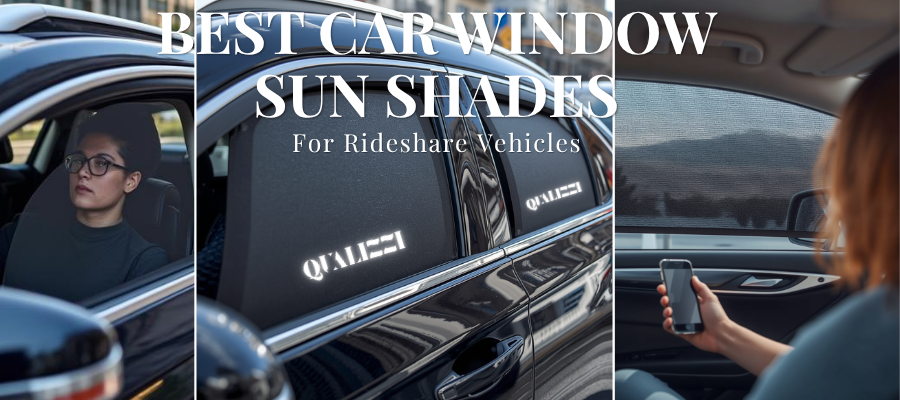
Best Car Window Sun Shades for Rideshare Drivers: How to Improve Passenger Comfort, Privacy, and Ratings Without Compromising Safety
Summary: Rideshare drivers face a unique set of problems that most car sunshade guides ignore: how to offer passengers privacy and comfort without making the back seat feel closed off, how to reduce glare on passenger devices without blocking the driver’s sightlines, and how to keep a shade in place across dozens of rides per day without constant adjustment. This guide covers the specific challenges rideshare and delivery drivers deal with, explains how different shade types perform in a high-turnover passenger environment, and provides a practical framework for choosing a sunshade that improves your ratings, protects your interior, and stays legal.
Introduction: The Rideshare Sunshade Problem Nobody Talks About
If you drive for Uber, Lyft, or any other rideshare platform, you already know that passenger comfort directly affects your income. Star ratings, tips, and repeat riders all depend on how the back seat feels. And on a sunny day, the back seat of most cars is miserable.
Direct sunlight heats up rear seats to the point where passengers are uncomfortable within minutes. Sun glare makes phone and laptop screens unreadable. The interior smells like hot plastic. And your leather or vinyl seats are slowly cracking and fading from daily UV exposure.
The obvious solution is a car window shade. But most shades are designed for parked cars or occasional family use — not for a vehicle that carries 20 to 40 different passengers per day. Suction cups fall off when doors slam. Static cling shades peel and wrinkle. Spring-loaded frames rattle. And anything that needs to be installed or removed between rides is simply not practical.
This guide is written for working rideshare drivers. It focuses on what matters in your specific situation: shades that stay on permanently, survive constant door use, keep passengers comfortable without making them feel trapped, and never interfere with your ability to drive safely.
What Passengers Actually Care About in the Back Seat
Privacy Without Losing Trust
Passengers appreciate not being fully visible to pedestrians and other drivers, especially in slow traffic or at stoplights. A degree of privacy makes the ride feel more personal, more like a private car than a fishbowl.
But there is a hard line. If the back seat feels sealed off — fully blacked out, no view of the outside — many passengers feel unsafe. They cannot see where they are going. They cannot verify that the route on their phone matches what they see outside. For riders who are alone, especially at night, this creates anxiety rather than comfort.
The solution is a shade that blocks the view into the car from outside, while keeping the view out of the car fully clear from inside. This is exactly what mesh shades do. Qualizzi car window shades use a double-layer spandex mesh that makes it difficult for people outside to see passengers, but allows passengers inside to see the road, street signs, and surroundings with no obstruction. It is privacy that builds trust rather than suspicion.
Temperature and Comfort
A passenger who gets into a hot back seat will rate you lower. It is that simple. They may not consciously think “the back seat is too hot, I am giving four stars instead of five,” but it affects their overall impression of the ride.
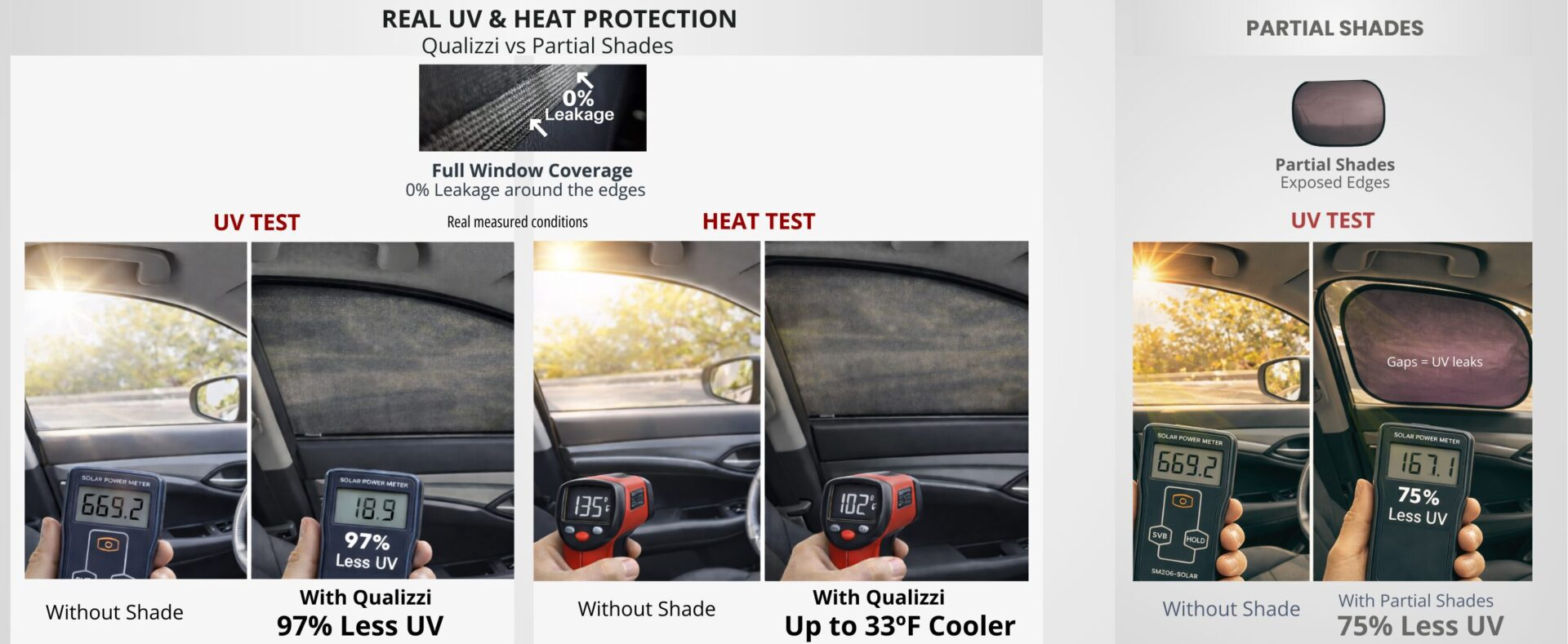
Car window shades reduce rear-seat temperature by blocking direct sunlight before it hits the seat, the seatbelt buckle, and the passenger’s skin. The difference is noticeable within seconds. Qualizzi shades block 97% of UV rays using double-layer 40D spandex mesh, which means the seat stays cooler, the seatbelt buckle does not burn, and the passenger does not arrive at their destination sweating.
Critically, mesh shades also allow airflow. Because Qualizzi shades fit over the door frame (not the glass), you can roll the window down with the shade in place. This means your air conditioning is supplemented by actual ventilation — fresher air, lower fuel costs from reduced A/C load, and a more comfortable ride.
Glare on Phones, Tablets, and Laptops
Business travelers, remote workers, and anyone checking their phone during a ride will notice screen glare immediately. Direct sunlight through an unshaded window makes phone screens effectively unreadable and forces passengers to cup their hands around the device or twist away from the window.
A mesh sunshade substantially reduces glare without darkening the interior to the point where the car feels gloomy. Qualizzi’s double-layer mesh filters harsh direct light into a softer, diffused illumination. Passengers can read their screens comfortably, and the interior still looks bright and welcoming — not like a car with blackout curtains.
The Driver’s Side: Challenges Most Guides Miss
Zero-Maintenance Installation
As a rideshare driver, you cannot waste time adjusting, reinstalling, or troubleshooting a sunshade between rides. Your shade has to work the way your seatbelt works: always there, always functional, zero daily effort.
This immediately disqualifies every shade type that attaches to the glass. Suction cups pop off from door-slam vibration and heat. Static cling shades wrinkle, shift, and peel, especially in warm climates. Magnetic shades detach when passengers lean against the window or when the door opens. All of these require you to regularly check and reattach — time you do not have.
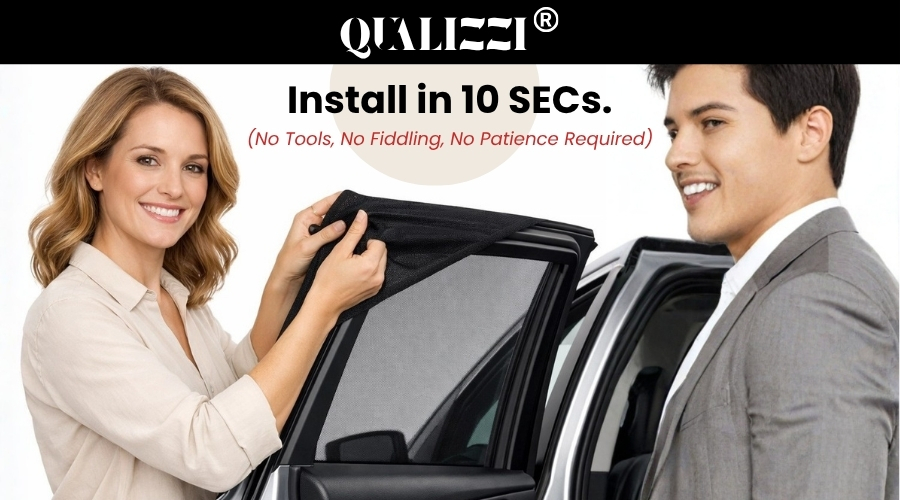
Qualizzi car window shades use a pull-over sleeve design that stretches around the entire door frame and stays there permanently. You install it once. It survives door slams, window operation, car washes, rain, and thousands of passenger entries and exits. There is nothing to check, reattach, or maintain. It is simply always on.
Sightlines and Safety
Your ability to see clearly through your mirrors and over your shoulder is non-negotiable. Any shade that impairs rearward visibility is a safety hazard and a liability.
Qualizzi mesh shades are designed to be transparent from the inside. When you check your side mirrors or glance over your shoulder for a lane change, you see through the mesh as clearly as through an unshaded window. The mesh blocks UV and reduces sun glare coming in, but it does not obstruct your outward view. This is a fundamental difference from tinted films or opaque shades that reduce visibility in both directions.
Passenger Safety: Nothing Loose, Nothing Falling, Nothing to Remove in an Emergency
Rideshare drivers carry strangers. That creates a duty of care that goes beyond comfort. Every accessory in the vehicle is something a passenger might interact with, lean on, or need to work around in the event of a sudden stop or an emergency exit. Suction cup shades that pop off during a hard brake become projectiles. Magnetic strips that detach when a passenger leans against the door are loose objects on the seat. Spring-loaded frames that snap free can strike a passenger who was not expecting it. Any shade that blocks the door from opening or the window from operating is a liability if a passenger needs to exit quickly. Qualizzi shades address every one of these scenarios. There are no detachable parts that can pop off or become projectiles during sudden braking. The shade is soft spandex mesh pressed against the frame, so a passenger leaning against it feels fabric, not hardware. The door opens and closes normally. The window operates normally. In an emergency, there is nothing for the passenger to remove, push aside, or fight with to exit the vehicle. The shade is simply there, doing its job, and it never becomes an obstacle. For a rideshare driver carrying 20 to 40 passengers per day, that is not just convenience. It is the safest possible approach to a rear window accessory.Wear and Durability Across Thousands of Rides
A shade designed for a family car that sees 10 door openings per week is not built for rideshare use. You may see 40 to 80 door openings per day. Passengers grab the door frame, lean on the window, toss bags against the shade, and occasionally pull on it thinking it is a curtain.
Qualizzi shades use 40-denier spandex yarn in a double-layer construction with reinforced elastic edges. The 40D yarn provides tear resistance without adding bulk or stiffness. The double-layer design means that even if the outer layer catches on a ring or bag zipper, the inner layer continues to provide UV protection. The elastic edge is sewn (not glued) to the mesh, so it does not separate with repeated stretching from door operation.
Rideshare drivers who use Qualizzi shades daily have reported them lasting multiple seasons of full-time driving. This is not a disposable accessory that needs to be replaced every month — it is equipment designed for the kind of daily abuse a working car receives.
How Sunshade Types Perform in a Rideshare Environment
Not every shade type can handle the demands of rideshare. Here is how they compare in a high-turnover, all-day driving context:
| Shade Type | Survives Door Slams? | Window-Down Use | Daily Maintenance | Passenger Visibility Out | Privacy from Outside | Rideshare Rating |
|---|---|---|---|---|---|---|
| Static Cling | Peels and shifts | No | Frequent reattach | High | Low | Poor |
| Suction Cup | Falls off | No | Reattach daily | Moderate | Variable | Poor |
| Magnetic Clip | Detaches on contact | Sometimes | Check after each ride | Moderate | Moderate | Poor |
| Spring-Loaded Frame | Rattles loose | No | Reposition often | Moderate | Low | Poor |
| Blackout / PVC | Depends on mount | No | Low | None | High | Poor (passengers feel unsafe) |
| Pull-Over Sleeve (Qualizzi) | Yes — stays on frame | Yes | None | High (see-through from inside) | High (opaque from outside) | Excellent |
Legal and Platform Policy Considerations
Before installing any shade, you need to know what is allowed — both by law and by your rideshare platform.
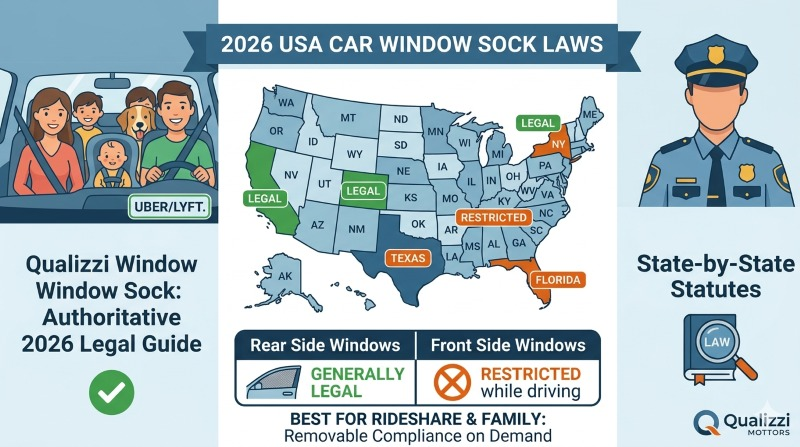
Traffic laws: In most US states, shades on rear side windows and the rear windshield are legal while driving. Front side windows and the windshield typically have restrictions. The specifics vary by state: some allow any shade on rear windows, others require a minimum light transmission percentage. Always check your state’s vehicle code before installing shades on any window.
Rideshare platform policies: Uber and Lyft do not explicitly prohibit rear window shades, but they do require that drivers maintain full visibility and a safe vehicle interior. A shade that blocks the driver’s sightlines or makes passengers feel unsafe could lead to complaints. Mesh shades that allow full outward visibility and do not darken the interior to an uncomfortable degree are the safest choice from a policy perspective.
The safest position: Use shades only on rear side windows. Choose a shade type that is see-through from inside (so passengers can verify their route). Ensure the shade does not affect mirror visibility. Qualizzi mesh shades meet all three criteria: they mount on rear doors only, they are fully transparent from the inside, and they do not obstruct mirror or over-the-shoulder sightlines.
If a passenger ever asks about the shades, a simple explanation works: “They block UV and reduce heat. You can see out clearly — they just keep the sun off you.” In practice, most passengers notice the comfortable temperature and reduced glare without ever asking about the shades themselves.
UV Damage and Interior Protection: The Long-Term Cost of No Shade
Rideshare drivers put more hours in their car than almost anyone. That means more UV exposure — both for you and for your vehicle’s interior.
Seat damage: Leather and vinyl seats that receive direct sunlight for 8 to 10 hours per day will crack, fade, and dry out within months. Replacing or reupholstering rear seats costs hundreds of dollars. A sunshade that blocks 97% of UV across the full window dramatically slows this deterioration. Qualizzi shades cover the entire window opening with no gaps, so there are no stripes of sun damage across the seat.
Dashboard and trim: While rear shades do not protect the dashboard directly, reducing rear-window solar heat gain lowers the overall cabin temperature, which reduces thermal stress on all interior surfaces.
Driver skin exposure: If you drive 8 or more hours per day, your left arm and the left side of your face receive significant cumulative UV exposure. While rear shades primarily protect passengers, the reduced cabin temperature and glare also improve the driver’s comfort. For direct driver-side protection, Qualizzi offers shades in 9 sizes that fit front side windows as well — though front window shade legality varies by state and should be checked before use.
Resale value: A rideshare vehicle with sun-damaged seats, cracked trim, and a faded interior loses thousands at trade-in. Protecting the interior with shades is one of the cheapest investments you can make relative to the depreciation it prevents.
Setup Guide: Installing Shades for All-Day Rideshare Use
The following guide uses Qualizzi pull-over sleeve shades, since they are the only type that requires zero daily maintenance in a rideshare context.
What You Need
- Two Qualizzi shades for the rear side windows (one per side)
- Optional: two additional shades for the rear quarter windows (SUVs and minivans)
- Correct size for your vehicle — Qualizzi offers 9 sizes with a vehicle compatibility guide
- No tools, adhesives, clips, or hardware
Step-by-Step
- Open the rear door fully. Work from outside the car.
- Stretch the top edge of the shade over the top of the door frame. The elastic grips the frame immediately.
- Pull the shade down and around, stretching it over the bottom of the window frame. The double-layer spandex conforms to the window shape.
- Close the door. The shade is locked in place by the elastic edge.
- Repeat on the other rear door.
- Test the window. Roll it up and down. The shade stays in place. Open and close the door several times. The shade stays in place.
Total setup time: Under 2 minutes for both rear windows.
Daily maintenance: None. The shades stay on the car 24/7, through rain, car washes, sun, and hundreds of door cycles. You do not touch them again unless you choose to remove them.
Cleaning: After heavy use (every few weeks or once a month), hand-wash the shades with mild soap and water while they are still on the car, or remove them and lay flat to air dry. Do not machine wash. This takes about 5 minutes and can be done during a car wash.
How Shades Affect Your Ratings and Tips
Rideshare ratings are driven by small comfort details. Passengers rarely give five stars because of one great feature — they give five stars because nothing was wrong. A hot back seat, a blinding sun glare, or a feeling of being exposed to pedestrians at a red light are the kinds of small negatives that turn a five-star ride into a four.
Window shades address several of these at once:
- Cooler back seat: The passenger sits down and the seat is not burning. The seatbelt buckle is not scalding. First impression is immediately better.
- Reduced glare: The passenger can use their phone normally. Business travelers can work on laptops without squinting.
- Privacy: Passengers feel like they are in a private car, not on display. This is especially valued on airport runs, business rides, and evening pickups.
- Professional appearance: Matching shades on both rear windows signal that you take care of your vehicle and pay attention to the passenger experience. It is a visual cue of quality, similar to a clean interior or bottled water in the door pocket.
None of this is guaranteed to raise your rating by a specific number. But drivers who invest in passenger comfort details consistently report higher ratings and better tips over time. Qualizzi shades are one of the lowest-cost, highest-impact upgrades you can make: install once for under $25, and every passenger for the next year benefits.
How to Choose: Your Next Steps
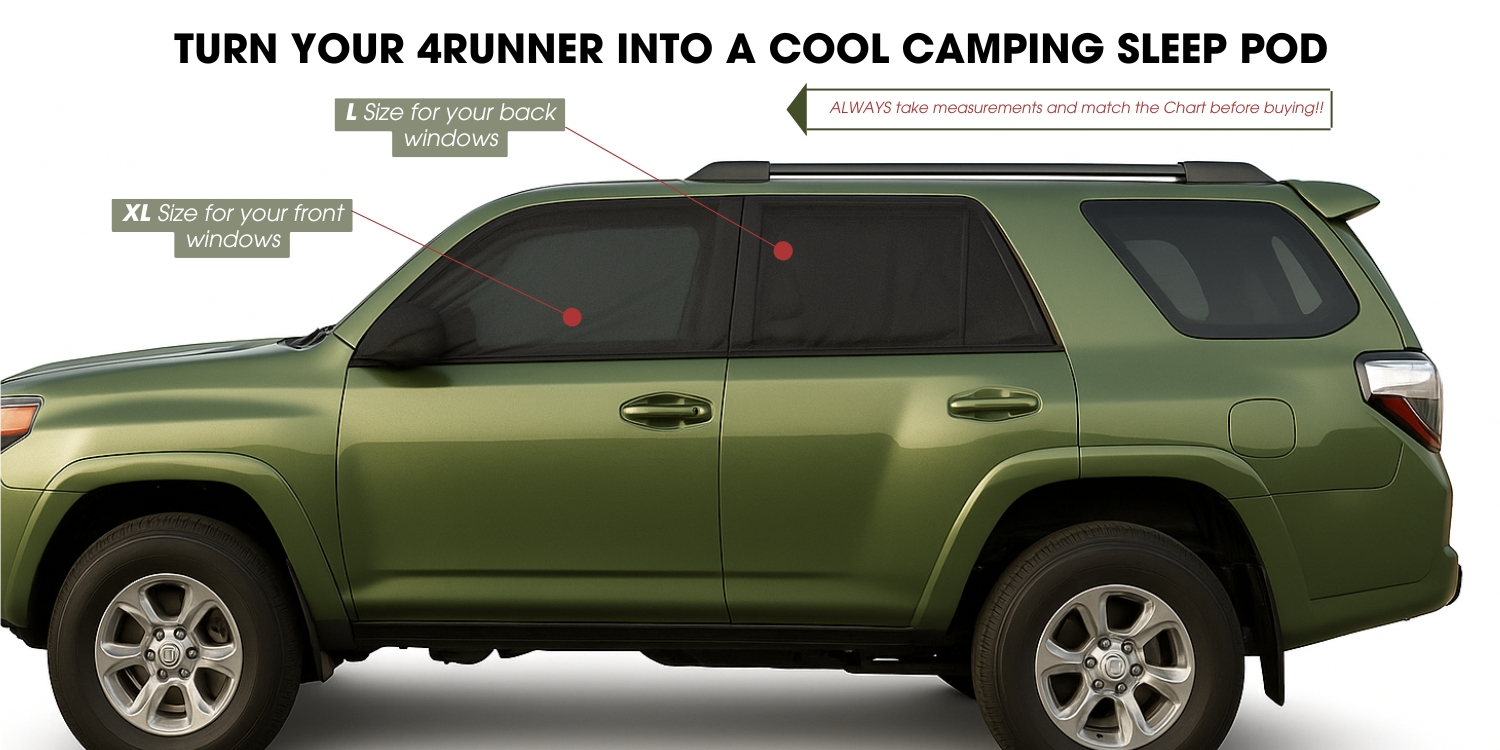
- Measure your rear side windows. Note the height and width. Qualizzi’s Amazon listing includes a size chart covering 9 sizes, from compact sedans to full-size SUVs and trucks.
- Eliminate any shade that requires daily installation or removal. In rideshare, if it does not stay on permanently, it will be abandoned within a week.
- Eliminate any shade that blocks outward visibility from inside. Your passengers need to see out. Your platform requires it. Your safety depends on it.
- Check your state’s laws on rear window shades. In most states, rear side windows are unrestricted, but verify before installing.
- Check your rideshare platform’s vehicle requirements. Ensure nothing in the accessory policy prohibits aftermarket window coverings.
- Install and forget. The right shade is the one you install once and never think about again. Every ride after that is slightly cooler, slightly more private, and slightly more comfortable for your passengers — with zero effort from you.
Upgrade your rideshare back seat today.
Qualizzi car window shades install in seconds, stay on permanently, allow full window operation, and block 97% of UV using double-layer 40D spandex mesh. Available in 9 sizes. Winner of the Mom’s Choice Award.
Frequently Asked Questions
Are car window shades allowed for Uber and Lyft drivers?
Neither Uber nor Lyft explicitly prohibits rear window shades, but both require that vehicles maintain safe visibility and a comfortable interior. Mesh shades on rear side windows that are see-through from inside and do not obstruct mirrors or sightlines are the safest choice. Avoid fully opaque or blackout shades, which could trigger passenger complaints about visibility or safety.
Will passengers feel uncomfortable with shaded windows?
It depends on the shade type. Blackout or heavily tinted shades make passengers feel closed off and unable to verify their route, which creates anxiety. Mesh shades like Qualizzi do the opposite: passengers can see out clearly while being shielded from direct sun and outside view. Most passengers notice the comfort improvement without ever noticing the shade itself.
Can I roll the window down with the shade on?
Only with sleeve-style shades that fit around the door frame. Suction cup, static cling, and magnetic shades must be removed to open the window. Qualizzi shades stay in place with the window fully open, fully closed, or anywhere in between. This allows ventilation on warm days without removing anything.
Will car window shades survive constant door opening and closing?
Standard shades (suction cups, magnets, static cling) will not. They are designed for occasional use and cannot handle 40 to 80 door cycles per day. Qualizzi pull-over sleeve shades attach to the door frame with a reinforced elastic edge and are built for exactly this kind of use. The 40D double-layer spandex does not stretch out, and the elastic does not loosen with repeated door operation.
Do rideshare window shades help with tips?
There is no guarantee, but drivers who invest in passenger comfort details (clean car, cool temperature, reduced glare, privacy) consistently report higher tip rates. Window shades address multiple comfort factors at once for a one-time cost under $25. It is one of the highest-return upgrades a rideshare driver can make.
Can I use window shades on front side windows as a rideshare driver?
Front window shade legality varies by state. Many states restrict any covering on front side windows while driving. For rideshare use, rear side windows are the standard and safest placement. Qualizzi offers sizes that fit front windows, but check your state’s vehicle code and your platform’s policy before installing front shades.
How do I clean car window shades that stay on all the time?
Hand-wash with mild soap and water, either while the shade is on the car or after removing it. Lay flat to air dry. Do not machine wash or wring. For rideshare use, a quick wash every few weeks keeps the mesh fresh. The entire process takes under 5 minutes per shade.
What size Qualizzi shade do I need for my rideshare vehicle?
Measure the height and width of your rear side windows and match them to Qualizzi’s size chart. There are 9 sizes covering everything from compact sedans to full-size SUVs and trucks. Popular rideshare vehicles like the Toyota Camry, Honda Accord, Toyota RAV4, and Honda CR-V all have compatible sizes listed in the guide.
Do mesh shades reduce air conditioning costs?
Yes. By blocking 97% of UV and reducing direct solar heat gain through the rear windows, mesh shades lower the rear cabin temperature. This means your A/C does not have to work as hard to cool the back seat, which reduces fuel or battery consumption over a full day of driving. The savings are incremental per ride but add up over weeks and months of full-time use.
Will a car window shade prevent my seats from cracking?
A shade that blocks 97% of UV across the full window significantly slows UV-driven deterioration of leather and vinyl seats. Without a shade, leather seats exposed to direct sunlight for 8 to 10 hours per day will crack, fade, and dry out within months. Qualizzi shades cover the entire window with no exposed gaps, so the protection is consistent across the full seat surface.